01-13-2020 Your Dad

The first reading from Samuel (1 SM 1:1-8) begins with giving us the lineage of Elkanah. It strikes me that knowing who our ancestors are is important to knowing who we are. The story goes on to tell about Elkanah’s two wives. One had children and one had none. Hannah struggled with her lack of children. This tells me something that I already know, kids are important to parents. Elkanah at the end of the story asks Hannah “Why do you grieve? Am I not more to you than ten sons?” I see this as a parallel to God’s relationship with us. We are important to Him and no matter your parental status here, with or without human parents, you can always count on God.

In the Gospel from Mark (MK 1:14-20) we hear about Jesus calling Simon, Andrew, James and John to be His disciples. They immediately leave their family and family business to follow Jesus. I see this as them trusting Jesus to guide them in a fatherly way.

10-3-2019 Teaching Styles

Image result for male cartoon teacher picture

The readings give us examples of how to teach. In the first reading from Nehemiah (NEH 8:1-4A, 5-6, 7B-12) Ezra gets up in front of the people and teaches them about God’s expectations for them by reading from the ” the book of the law “. This is a method most of us are familiar with as the American Educational System is designed around a lecture method of knowledge delivery.

Nehemiah says “Ezra read plainly from the book of the law of God, interpreting it so that all could understand what was read.” This is the part I like best. I appreciate teachers who are critical thinkers. I like when they share a lesson and tell me what it means to them.

To me God’s Word is best understood when It is given a current day context. Teachers who take on the daunting task of reaching God’s people serve the learners best when they put themselves mentally in the position of the student and craft a message that meets them where they are. This certainly is not easy to do, but the investment in time and energy makes the payoff great.

In the Gospel (LK 10:1-12) from Luke. He tells the story of Jesus sending out seventy-two disciples ahead of Him. Jesus says “I am sending you like lambs among wolves” and He continues giving them many instructions on what to say and how to act.

Jesus is instructing the instructors. He is telling them how to act so they will be an example to the people they are among. Teaching by example. Now read the passage “I am sending you like lambs among wolves”, He is telling them if you act like sheep the wolves will learn to be gentle sheep too.

Giving an example is the way I try to teach in most cases. That is because its the easiest way to teach. You do not have to prepare an interpretation and lesson. You just decide how to act and act that way. Hopefully others around you pay attention and pick up what you are laying down. Undoubtedly it is a much slower process.

08-05-2019 Bare Necessities

In the first reading from (NM 11:4B-15) this morning Moses is hearing the Israelite people complain that the manna is not worthy of them. Think of that, God created a miracle of creating food on the dessert floor via a dew fall. Soon after the people he did it to save are now complaining that it is not what they want. Although, I sit here and think “what the heck”, I have been like the Israelite people. God has given me so many great things in my life and yet I can be unhappy that they are not always the things I want.

In the Gospel reading Jesus learns of the death of His cousin John the Baptist (MT 14:13-21). He tries to get away from the crowds via a boat. I suppose to grieve. But when He gets to where He is going He finds the crowds have followed Him. Shortly there after the disciples suggest that He dismiss the crowds so they can get food. Jesus says sit them down and give them what you have. The disciples only have five loaves to two fish. Jesus performs a miracle and feeds the 5000 with this small amount of food.

Although the common thread in both of these stories is food, it represents all of the things that God has given us. I plan to do a better job of recognizing the miracles He provides everyday and be more thankful for them.

03-08-2019 Nullify

Today’s first reading from Isaiah (IS 58:1-9A) tells me that we can nullify our fasting and sacrifices by continuing to do what we normally do. What I mean is if we fast and sacrificing at one point in the day then go do our normal God ignoring acts at another point in the day our sin nullifies our good works. I think Isaiah is telling me that I need to commit and act in ways as God expects all day or I waste my time with my half pursuits.

The Gospel (MT 9:14-15) is harder for me to understand. We are in a time of fasting and sacrifice as we lead up to Jesus’s death on the cross. We are trying to live our lives a key lower than we normally do. But then in the reading Jesus talks about not fasting when you are with Him. So I think I take this to mean that when you are with Jesus fasting is not as important. So after Easter when Jesus has been risen from the dead He will be with us again and we can go back to living at a higher key.

03-07-2019 Literal

Moses tells the Israelites that they should choose God over all other things (DT 30:15-20). They will be rewarded for choosing Him. If they don’t pick Him there will be consequences too. There is not a great deal of interpretation needed. It’s pretty obvious what he is saying in this reading.

Jesus in the Gospel (LK 9:22-25) gives us a clue to what choosing God looks like. He says “If anyone wishes to come after me, he must deny himself and take up his cross daily and follow me.” I read this as telling me in my daily life I should pick things that are not for me and are not easy to really follow God as Jesus teaches.

03-06-2019 Lent

In the first reading from Joel (JL 2:12-18) we are reminded to return to God and turn away from our sins. We are asked to join with others in doing this. In the second reading (2 COR 5: 20-6:2) we are reminded that we represent Christ to others around us. So our actions will be viewed by others. We should not take His call lightly and remember His blessings in our life.

The Gospel (6:1-6, 16-18) tells us as we undergo trials and tribulations we should not let them get us down. We should not expect to be paid for our sacrifices by the people around us. God is watching and knows what we do in his name.

01-04-2019 Recognition

In today’s first reading John (1 JN 3:7-10) is telling us that there is a difference between good and bad. You cannot be both. Sinning a little makes it impossible to fully enjoy the good. As a result you are torn and you never find true happiness or fulfillment.

If you recognize and accept that you are begotten (beget = bring (a child) into existence by the process of reproduction) of God you can use that connection to reject sin. You are still part of Him and if you ask He will help you push away the things that disturb your relationship with Him.

John says “the children of God and the children of the Devil are made plain“. You know to whom this is plain? It is evident to you and God. The rest of the world may see you as one or the other but truly in your heart you know to whom you belong. If you are unhappy make the choice for God.

The Gospel from John (JN 1:35-42) (John again that is weird) is rich with possibility for interpretation but I am struck by Simon being called to Jesus as a result of Andrew being called first. When you consider the first reading it fits. It says to me that if you choose to act righteously then others will be curious and called to Christ as a result.

What better opportunity do we need as incentive?

11-26-2018 Symbolism

Image result for symbols musical instrument

Like I said when I started this blog, I am no bible scholar or ordained minister of the church. I am going to offer my take on today’s first reading from the book of Revelation (RV 14:1-3, 4B-5). As I read John’s writing is this book I see symbols. I could be way off on what these readings really mean so reader beware!

Take for instance these two lines “I heard a sound from heaven like the sound of rushing water or a loud peal of thunder. The sound I heard was like that of harpists playing their harps.” When I think about rushing water and thunder I contemplate loud noises that hurt my ears. But John goes on to say it sounds like a harpist. When I think about a harpist I think beautiful soothing music.

I think John is telling us that in any situation what we experience is what we perceive. In other words anything we come upon in life it is up to us to decide what we see and how to react. Our best reactions come when we know who we are and are okay with ourselves. God invites us love and accept ourselves so we can more fully love one another and Him.

I know this is only a small snippet of this reading and there is much more that could be discussed but this is a good example to me of John’s use of symbols to stretch us into being better followers of Christ.

The Gospel reading from Luke (LK 21:1-4) talks about the widow giving her livelihood to the offering. Again I think this reading is teaching us with symbols. The widow is a symbol of each of us. The money symbolizes things of man. Giving away everything in this world takes trust. Think about the trust it takes to give away all you have. You must trust that your treasure is going to do God’s work. You must also trust yourself that with God’s help you will be better off for your sacrifice.

As a literal person I find it challenging to see the symbolism in God’s word. However, I find it rewarding when I take the time to deeply contemplate the text and consider its bigger meaning.

10-30-2018 Exponential growth

exponential Growth.png

My wife dislikes today’s first reading from Ephesians (EPH 5:21-33). As a matter of fact this reading was one that I was supposed to read earlier this year as a lector. Our parish priest had me use the alternate shorter version to avoid making anyone in the congregation uncomfortable.

The reason my wife does not like it is for this line. “Wives should be subordinate to their husbands as to the Lord. For the husband is head of his wife just as Christ is head of the Church, he himself the savior of the Body.” She does not like to hear that women should be subordinate to anyone.

The writing from Paul comes from another time and he was looking for ways to teach the people about Christ’s relationship to the church. Since they are the church he was looking for a way to make it clear to them that they should be subordinate to Christ.

He goes on to say some really beautiful words about the man’s role in a marriage. “Husbands, love your wives, even as Christ loved the Church and handed himself over for her to sanctify her, cleansing her by the bath of water with the word, that he might present to himself the Church in splendor, without spot or wrinkle or any such thing, that she might be holy and without blemish. So also husbands should love their wives as their own bodies. He who loves his wife loves himself. For no one hates his own flesh but rather nourishes and cherishes it, even as Christ does the Church, because we are members of his Body.”

Paul is tell the people they should not be afraid of being subordinate because the one they are subordinate to loves them like that person loves themselves. Giving up control is what we fear. Paul is saying God and Christ love you like they love themselves so we should not fear giving up control.

When it comes to marriage, I understand fearing giving up control. Women are equal to men. However, in relationships often there needs to be a leader. That can be the woman or the man. In any situation if someone is not suggesting ideas for the path forward they do not move forward. This person is the leader.

This is what I think God is suggesting. In marriage sometimes one of the partners should be subordinate to the other. This could be the man or the woman and probably should alternate based on the situation at hand. But when it comes to our lives God is always in control and it is up to us to be subordinate.

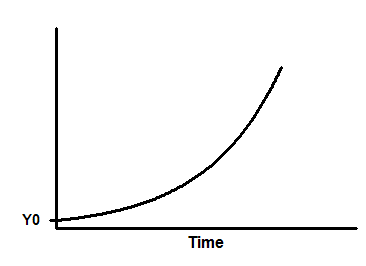
In the Gospel from Luke (LK 13:18-21) Jesus is telling what the Kingdom of God is like. He tells about the yeast and mustard seed. He says they start small but grow exponentially big. I think this is what our relationship is like in marriage and with God. They start small you invest trust and it grows larger all the time.


10-29-2018 Follow your own path

Paths.JPG

God calls us to act like Him. Paul in his letter to the Ephesians (EPH 4:32–5:8) today reminds us of this. Luke is his Gospel tells us that there is reward if do (LK 13:10-17). It is all summarized succinctly in the Psalm (PS 1:1-2, 3, 4 AND 6).

Paul tells us it is easier to act like God if we stay away from those that do not. He calls these people idolaters. They all have something else they are focused on besides God. Find those that are focused on God and make them your friends.

You can also expect people to be upset when you act this way. In the Gospel it is the leader of the synagogue. He is upset that Jesus cured the woman on the sabbath. You can expect your ways will draw negative attention. Do not change to please the world.

If you do as God asks you can expect to be rewarded.

When Jesus saw her, he called to her and said,
“Woman, you are set free of your infirmity.”
He laid his hands on her,
and she at once stood up straight and glorified God.